
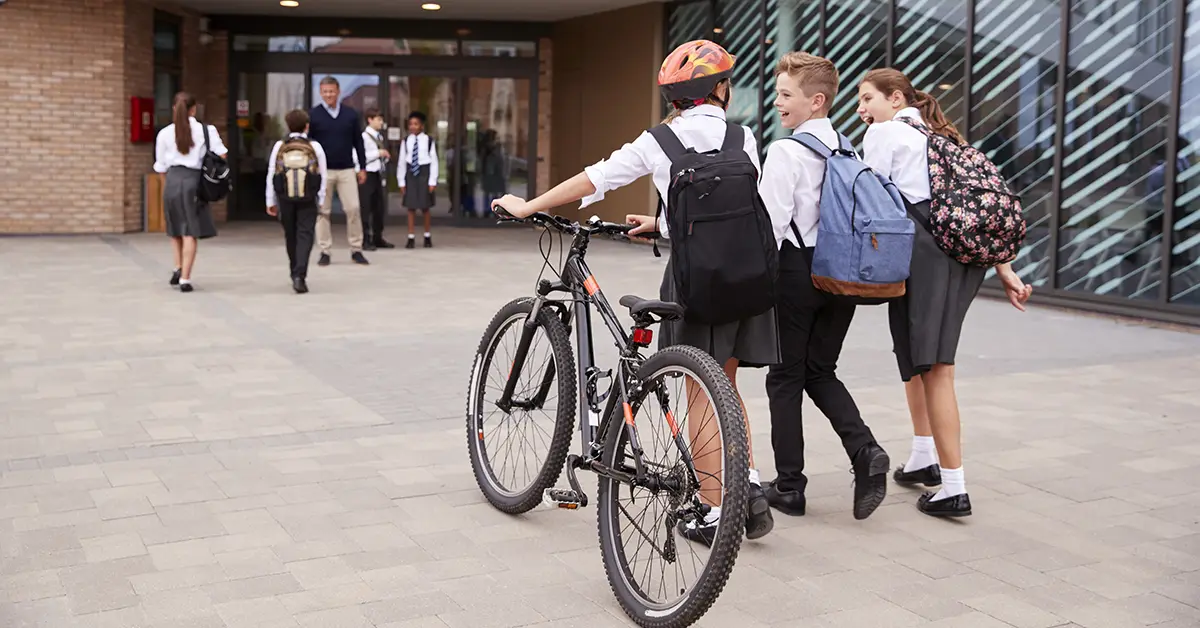
Schools are one of the most complex transport environments. Typically, within a short window twice a day, hundreds of vehicles arrive and depart, pedestrians of all ages move through the same space, and drivers under time pressure can make decisions that affect child safety.
Schools are about people first and foremost and, therefore, design solutions cannot focus on car drivers only, they need to be at a human scale. Traffic engineers and Transport planners address this complexity with a focus on reducing risk for students, families, and the wider community.
The challenge goes beyond car parking, though parking is consistently the most pressing concern. It extends to drop-off and pick-up zone design, active transport infrastructure, stakeholder engagement, and compliance with council requirements that may not reflect how a school actually operates.
Why school transport is a design problem, not just a management problem
There are some aspects of a school that cannot be retrofitted. Where the school is located and how buildings were set on the site can only be changed at early feasibility and masterplanning stage. Ensuring schools are strategically placed near transport hubs, facilitates public transport uptake.
The way a school site is laid out determines how safely and efficiently people can move through it. Poorly designed drop-off zones, insufficient turning space, and unprotected pedestrian crossings create conditions where risk is structural rather than incidental. No amount of supervision or signage fully compensates for a layout that puts pedestrians in conflict with vehicles.
For schools at development application stage or earlier, getting the design right before construction begins is significantly less costly than retrofitting infrastructure later. Early assessment of parking requirements set by the relevant Development Control Plan (DCP) is a critical first step. Those requirements should be evaluated against the school’s operating model and questioned when possible. In some cases, DCP requirements exceed what is genuinely needed, creating pressure to build more parking than is necessary or feasible.
 Active transport as part of the long-term solution
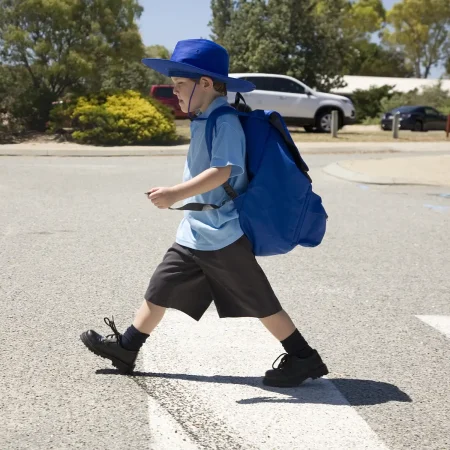
Managing vehicle volumes is necessary, but encouraging alternative modes of transport addresses the underlying issue. Schools that increase the proportion of students and staff travelling by foot, bicycle, or public transport reduce peak vehicle demand in the school zone, which improves both safety and operational efficiency. The ultimate benefits go beyond traffic. Students who travel actively to school register better performance and improved general wellbeing.
A School Transport Plan identifies the appropriate strategies tailored to the school’s community and environment, including active transport infrastructure. Several proven initiatives support the shift towards active transport including:
- Park and Walk programs encourage families to park within 800 metres of the school and walk the remainder of the journey, reducing the number of vehicles entering the immediate school zone.
- Walking and Riding School Bus programs establish supervised group walks or rides along set routes, with pick-up points that function similarly to public transport stops.
- School Street Closures, where roads adjacent to the school are closed to through traffic at peak drop-off and pick-up times, have been successfully implemented in a number of jurisdictions.
- Undertaking a gap analysis of nearby walking and cycling routes to identify where improvements can be made to allow children and staff to walk and cycle safely.
For ptc.‘s work at Pal Buddhist School in Austral, a more tailored solution was required. The site’s narrow configuration and significant tree retention requirements left limited space for on-site parking. Council’s infrastructure requirements were not feasible within the school’s budget. The strategy developed by ptc. centred on a structured pick-up and drop-off scheme using a minibus service connecting students to and from Leppington Station. The solution reduced on-site vehicle demand without compromising access.
Reducing risk in existing school zones
For schools that are not in a development process but are managing ongoing transport challenges, the scope of work typically spans several areas.
A review of the drop-off and pick-up zone operations and design can find changes that produce significant results. The location, length, and entry and exit configuration of these zones directly affects how vehicles queue, how pedestrians cross, and how efficiently the school zone clears at the end of each session. A well-designed zone with effective operations can reduce illegal stopping, double parking, and the pedestrian conflicts that come with them.
Traffic management strategies help redirect vehicle movements and guide pedestrians through the school zone. These may include linemarking, signage, or recommendations to council about road network adjustments in the surrounding area.
Examining how existing on-site and nearby car parking areas are being used can reduce demand for new construction. In a recent ptc. project at St John XXIII School, a shared parking arrangement eliminated the need for additional parking spaces, preserving site area for educational use.
 Government programs and the broader picture
If the population uses private cars to do all their daily activities, why would it be different when taking their children to school? A broader cultural and societal change is required to result in large scale behavioural change.
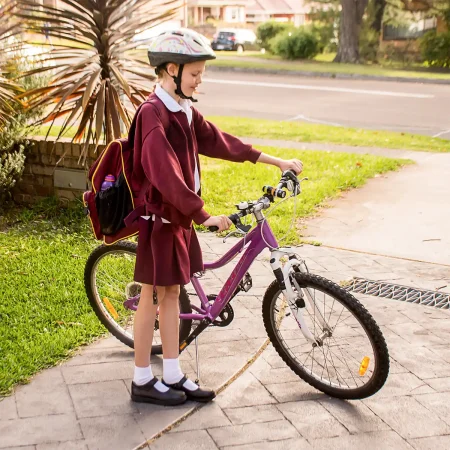
At a policy level, several state and national programs exist to support schools in promoting active travel. In New South Wales, Get Kids Active provides funding for pedestrian and cycling infrastructure improvements around schools as well as initiatives to encourage active transport participation. Education NSW has a dedicated program supporting school leaders and teachers to embed active travel into the school routine.
Other programs operating nationally or in other states include Bicycle Network’s Ride2School initiative, Western Australia’s Your Move program, the ACT Ride or Walk to School service, and VicHealth’s Walk to School campaign. These programs provide resources, grants, and expertise that can complement a school’s own transport planning efforts.